How to Build a Christmas Village
Plan, build and light a Christmas village display step by step: choosing a spot, starting pieces, adding movement and growing your village each year.
Updated 17 November 2026
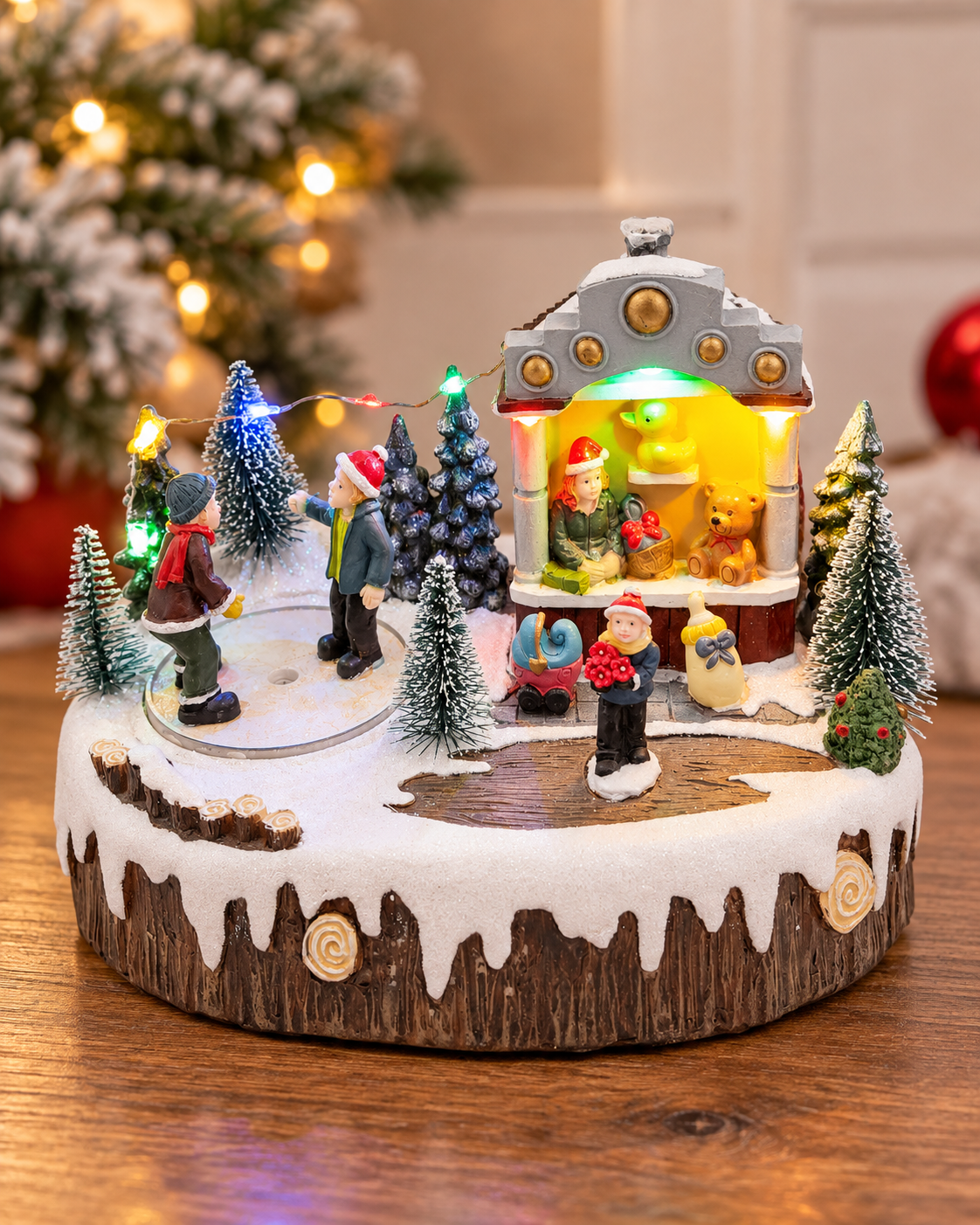
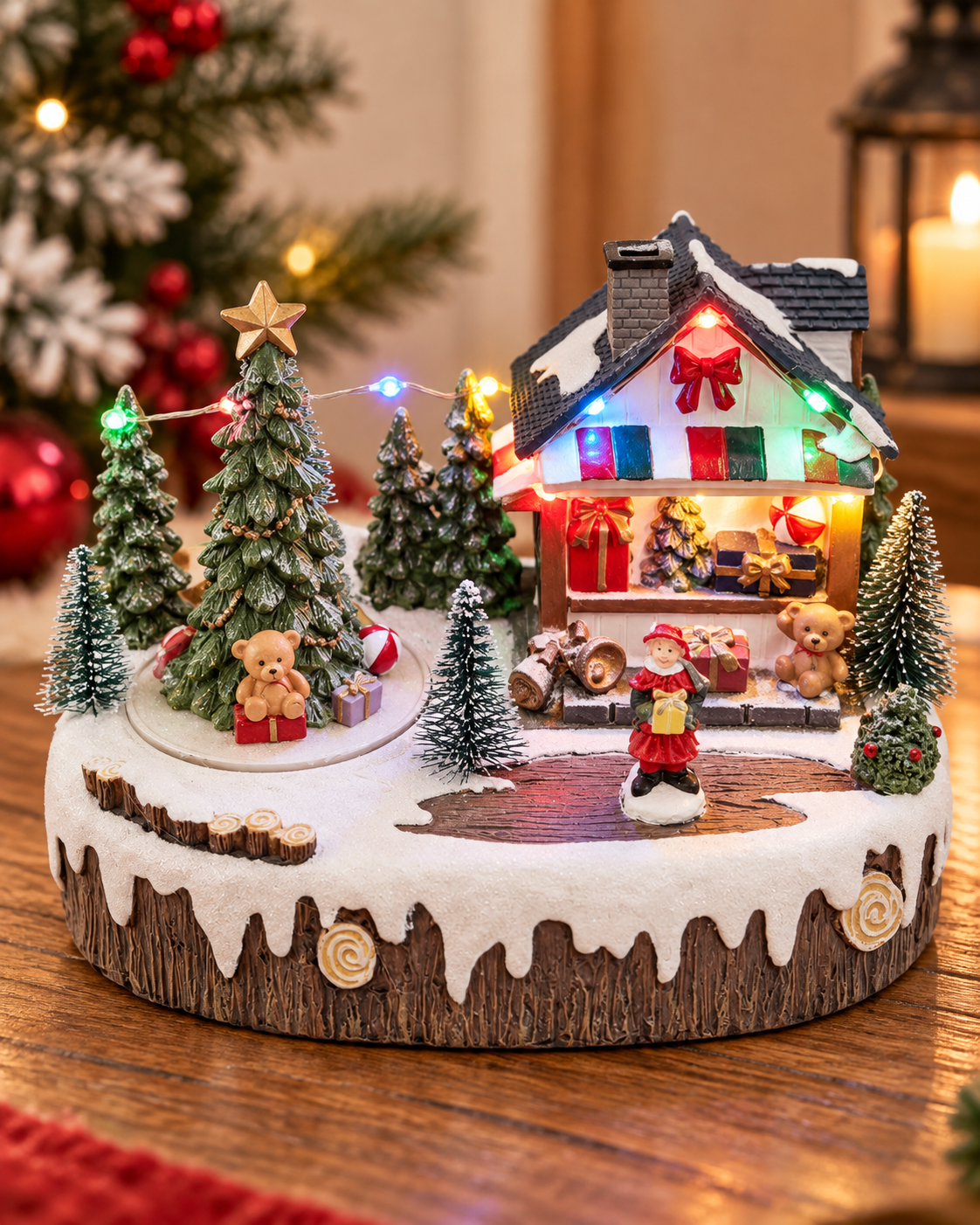
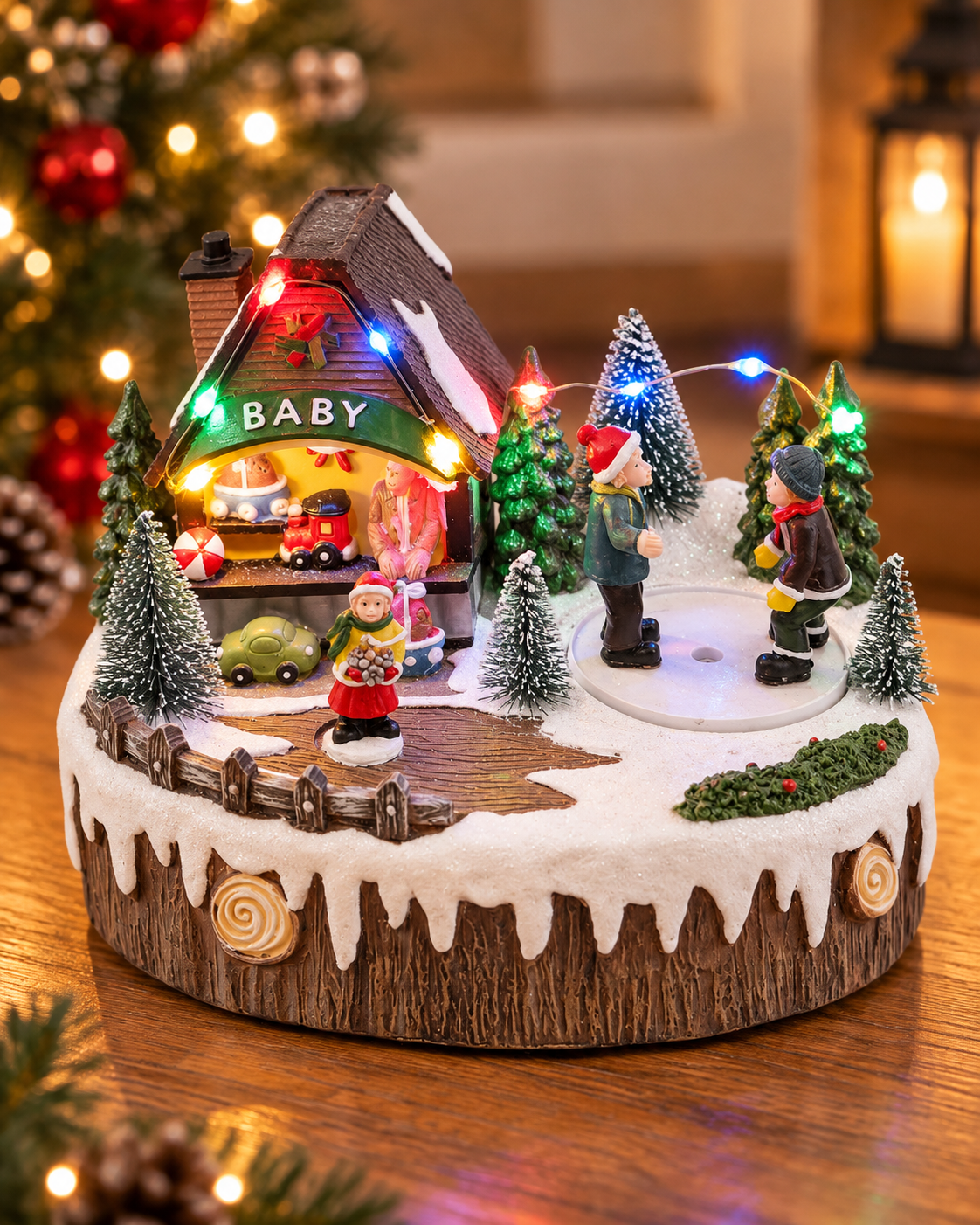
A Christmas village is a little lit-up winter town that you bring out every year and add to over time. Children love watching the trains and carousels, and it becomes a family tradition quickly. Here’s how to plan one, what to start with and how to make it look full.
1. Choose the spot
A sideboard, mantel, deep windowsill or a table against a wall all work. Look for a surface at least 40cm deep so you can layer buildings front to back, and a plug point close by. Some pieces run on USB power and some on batteries or an adaptor, so check each product page before you plan the wiring. Keep the village out of direct sunlight, which fades painted detail.
2. Start with two or three anchor buildings
Every village needs landmarks: a church, a shop and a house or two. Put the tallest building at the back and slightly off-centre, and the smaller cottages in front. Lit and musical buildings make the best anchors because they draw the eye.
Anchor buildings

3. Add movement
Movement is what turns a display into a scene people stop to watch. A train circling the village, a turning carousel or a ferris wheel gives it life. One moving piece is plenty for a small village; larger displays can carry two or three, spread apart so they don’t compete.
Animated pieces
4. Fill in the streets
The small details make a village believable: lampposts, carol singers, frosted trees and a postbox. Group them in little scenes, such as carollers outside the church or a lamppost at a corner, rather than spacing them evenly.
Village accessories


5. Build levels and add snow
A flat village looks like a shop shelf. Raise the back row on books or sturdy boxes, then drape a white cloth or snow blanket over everything so the risers disappear into hills. Hide cables under the snow and run them to the back.
6. Grow it every year
Most collectors add one or two pieces each Christmas. It spreads the cost and gives everyone something new to look forward to when the boxes come out. Wrap each piece separately when you pack away, and keep the original boxes if you can.
Shop the Christmas village range